 Shared by @simonw ↗
 Shared by @natanael.bsky.social ↗
 xda-developers.com2h ago
 Shared by @sailorjourno.bsky.social ↗
 interestingengineering.com2h ago
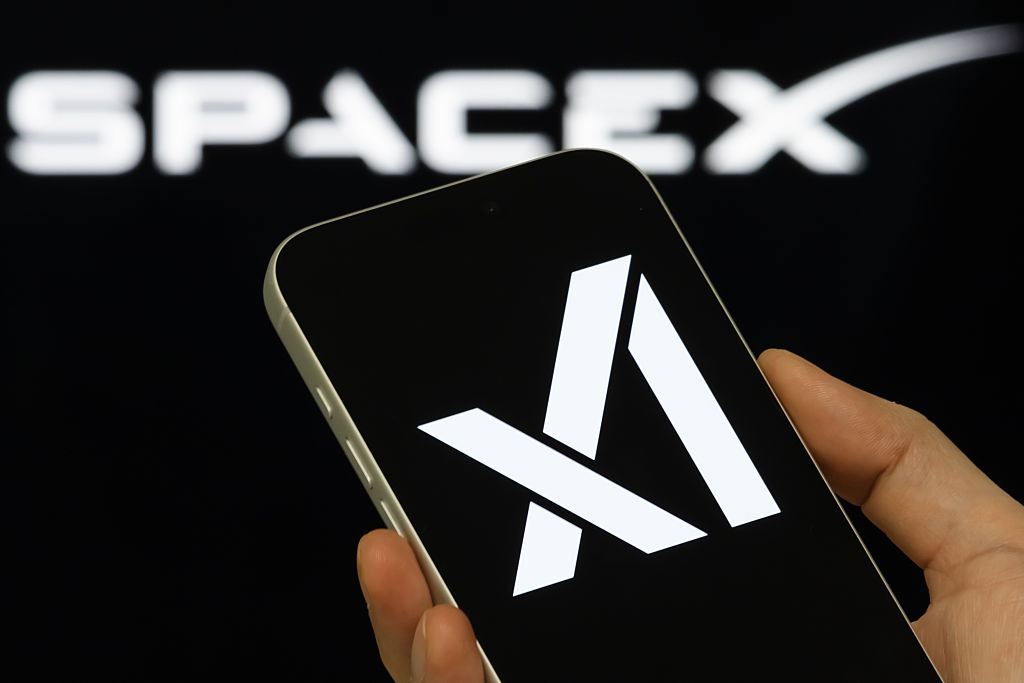
Reflection AI, an open-source artificial intelligence startup backed by Nvidia, has signed a deal with SpaceX worth up to $6.3 billion for access to the company's Colossus 2 data center near Memphis, Tennessee. Under the agreement, Reflection will pay $150 million per month from July 1, 2026 through 2029 for immediate access to Nvidia's latest GB300 AI chips and supporting hardware, according to twp.ai. "Either party can terminate the contract with 90 days' notice after the first three months." The deal follows similar arrangements SpaceX has made with Anthropic and Google, though this one is smaller in scale, twp.ai reported. The agreement highlights that SpaceX's massive compute infrastructure is becoming a revenue-generating business beyond internal AI chatbot use, according to Zero Hedge. The news comes amid SpaceX shares declining for a third straight session, down about 9%, after the company announced plans to sell investment-grade bonds for the first time, Zero Hedge reported. Gizmodo noted that the partnership signals a shift in SpaceX's primary business focus from space exploration ambitions, such as Mars and lunar colonies, to becoming a data center lending company. "This partnership signals that SpaceX's primary business focus has shifted from space exploration ambitions to becoming a data center lending company." The Colossus facility spans over one million square feet, Gizmodo reported. The deal also highlights a positive outlook for open-source AI development, as Reflection is an Nvidia-backed open-source AI startup, according to Gizmodo and Zero Hedge.

Reps. Andrea Salinas and Kevin Mullin, as part of the SEEC Innovation and Technology Task Force, toured Bay Area clean energy sites including Lawrence Berkeley National Laboratory and a battery manufacturing facility. They held a Clean Energy Tech roundtable focused on research,
 quiverquant.com·Tech by Flipboard·2h ago·3 min read
FastContext-1.0 is a lightweight repository-exploration subagent designed for LLM coding agents. It separates the roles of repository exploration and task solving by being invoked on demand by a main coding agent. It issues parallel read-only tool calls (READ, GLOB, GREP) and ret

 Shared by @channelnewsasia.bsky.social ↗
 channelnewsasia.com2h ago
 Shared by @environmentbriefly.bsky.social ↗
 briefly.co2h ago
 Shared by @riyeff.bsky.social ↗
 hedgehogreview.com2h ago
 Shared by @drjerrykinard.bsky.social ↗
 baptistpress.com2h ago
 Shared by @gigowat.bsky.social ↗
 9to5mac.com2h ago
 Shared by @tweaktown.com ↗
 tweak.town2h ago
 Shared by @adelaide07.bsky.social ↗
 404media.co2h ago
 Shared by @ai-linkstream.bsky.social ↗
 developers.googleblog.com2h ago
 Shared by @connichameleon.bsky.social ↗
 hai.stanford.edu2h ago
 Shared by @caddymarketing.bsky.social ↗
 digiday.com2h ago